
Sending Texts with Images (MMS)
Note: MMS messaging is currently activated for Notify users in the US and Canada. For other countries please contact us for more information about how to get set up.
Sending a text message with an image (also known as Multimedia Messaging Service or "MMS") is a great way to engage your customers. When you send an MMS, the image you include will appear above the message text on your customers' mobile device. Here's an example:
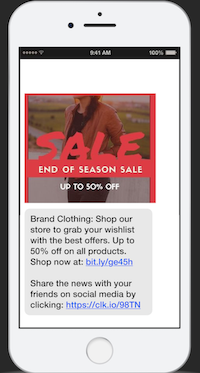
To send an MMS with Notify, just click the image icon on the Send Text page:

You will then see a pop-up where you can choose the image file you want to include.
IMPORTANT: Image attachments must be less than 5 megabytes (MB) in size, and be a JPEG, PNG, or GIF file type.

After you select the image you want to include, you should see it in the campaign preview widget, which is next to the message input field on desktop, and underneath the Purchase button if you are on a mobile device:
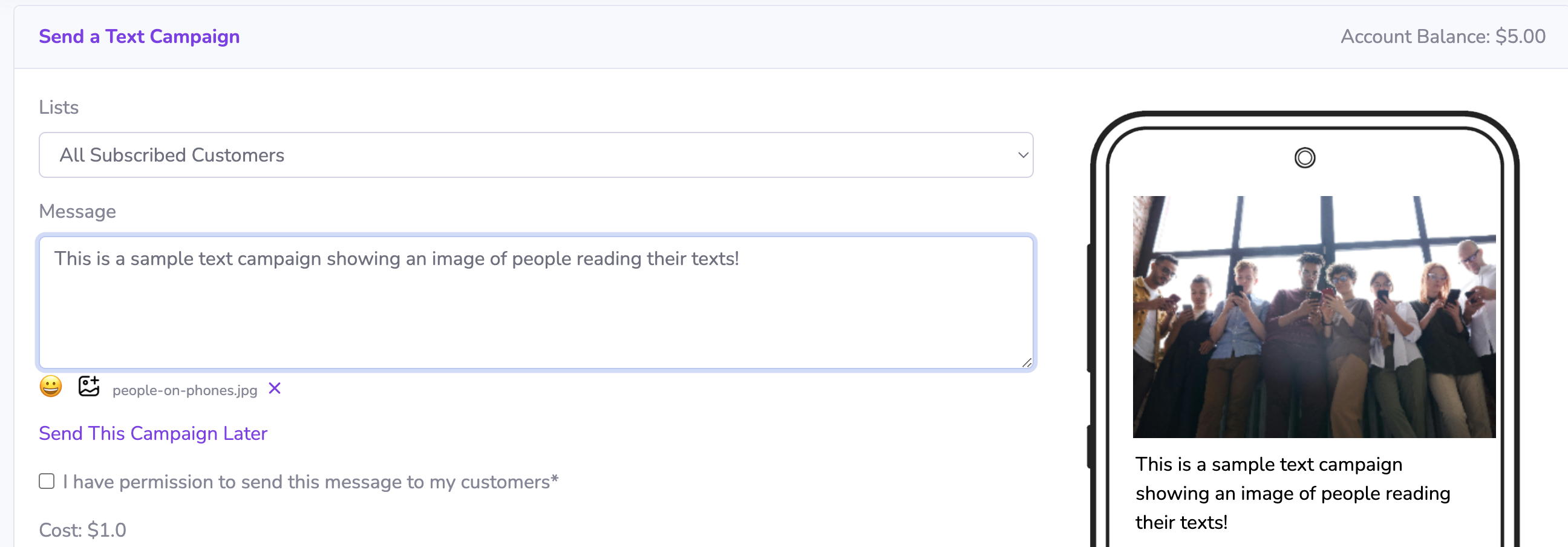
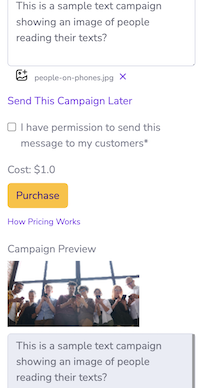
To remove an image you have added before sending your campaign, just click the "X" next to the image filename underneath the message input field:

Images can be useful when a visual helps customers understand the offer faster, but they should be used intentionally.
When should I use an image in a text campaign?
Images work best when the picture adds useful context to the message. Common examples include:
- A photo of a featured product
- A restaurant menu item or daily special
- A flyer for an event, sale, or promotion
- A before-and-after example for a service business
- A coupon or offer graphic
- A visual reminder for an appointment, class, or seasonal promotion
If the customer can understand the message just as well without the image, a plain SMS campaign may be the better choice.
Do image messages cost more?
Yes. Sending a message with an image costs more than sending a plain text-only SMS campaign. This is because MMS messages use more carrier resources than standard SMS messages.
Before sending your campaign, review the campaign cost shown in Notify Customers so you understand the total charge before confirming the send.
You can also review our pricing explanation here:
What kind of image should I use?
Use a clear, simple image that is easy to understand on a phone screen. Avoid images with too much small text, crowded designs, or details that only look good on a desktop screen.
Good image choices usually have:
- A clear subject
- Readable text, if text is included
- Strong contrast
- No unnecessary clutter
- A direct connection to the offer or update
If you are sending a sale or promotion, include the most important details in the message text too. Some customers may see the text before the image loads.
Can every customer receive MMS messages?
Most modern mobile phones can receive MMS messages, but delivery can still depend on the customer’s carrier, device, network connection, and messaging settings.
Because of this, your campaign should not rely only on the image. Put the most important information in the text of the message so customers can still understand the campaign if the image is delayed or does not display as expected.
Best practices for sending images
- Use images only when they make the message more useful.
- Keep your message text clear and complete.
- Avoid sending image-heavy campaigns too often.
- Make sure customers have opted in to receive texts from your business.
- Review the campaign cost before sending.
- Test the campaign when possible before sending to a large list.
Examples
Retail store: Send a photo of a new product drop with a short message about availability.
Restaurant: Send a picture of a featured dish with a lunch special or weekend promotion.
Salon or spa: Send a visual reminder for a seasonal service or limited-time package.
Contractor or home service business: Send a before-and-after image to promote a service or seasonal offer.
Should I send an SMS or MMS campaign?
Use SMS when the message is simple, direct, and does not need a visual. Use MMS when the image helps customers understand or respond to the campaign.
For many businesses, the best approach is to use plain SMS for most routine updates and use MMS selectively for campaigns where the image can improve engagement.